|
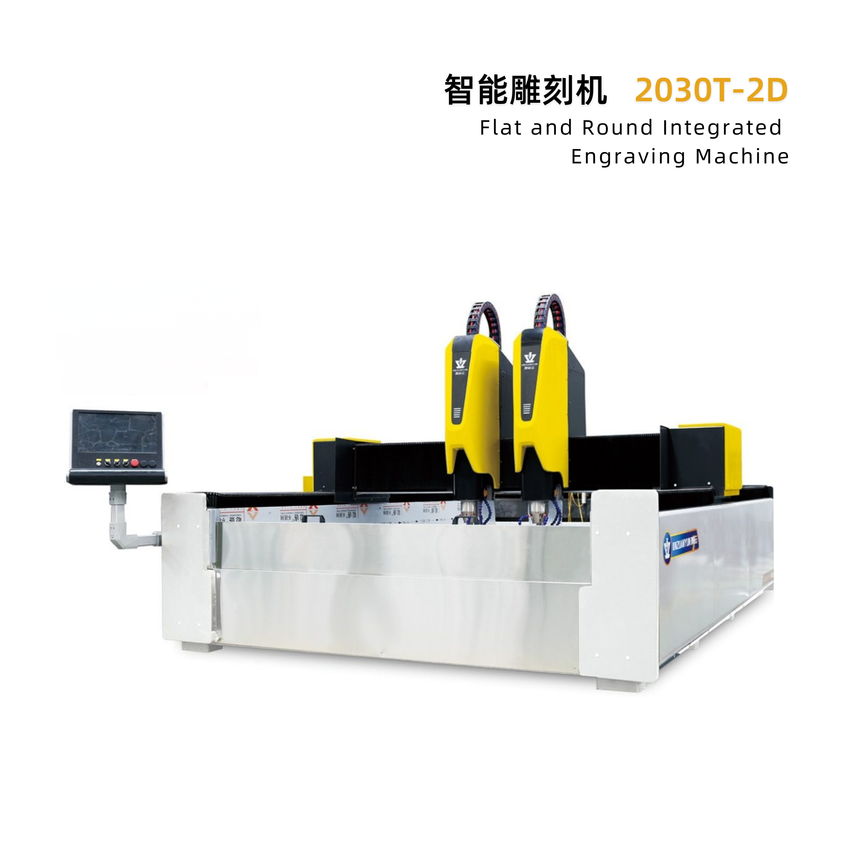
Functions, Applications and Efficiency of Three-Axis Stone Engraving MachineFunctions, Applications and Efficiency of Three-Axis Stone Engraving Machine The three-axis stone engraving machine is a basic model in the field of stone CNC processing. With three linear axes (X, Y, Z) as its core motion structure, it is widely used in various basic stone processing scenarios due to its advantages of simple structure, convenient operation and outstanding cost performance. Its functions, applications and efficiency all focus on the core positioning of "basic processing, batch adaptation and high efficiency and stability", which are detailed as follows.
I. Core Functions The core functions of the three-axis stone engraving machine focus on planar and basic three-dimensional processing. Relying on the linear movement in three directions (X: left and right, Y: front and back, Z: up and down), the tool is always perpendicular to the processing plane. It can realize a variety of basic stone processing technologies, balancing precision and practicality. The specific functions are as follows: • Basic Cutting and Forming: It can complete linear cutting, rectangular cutting and simple special-shaped cutting (non-inclined angle) of stone. It is suitable for various stones such as marble, granite, bluestone and artificial stone, as well as materials such as ceramics and glass. It can accurately cut standard-sized plates to meet the basic material needs of home decoration, engineering and other fields. The cutting edge is flat, and the chipping rate is controlled at about 1.5%~2%. • Text and Pattern Engraving: It supports two methods: intaglio and relief engraving. It can accurately engrave various fonts, simple patterns, logos, etc. Whether it is tombstone inscriptions, merit monument texts or home decoration patterns, it can ensure neat fonts and clear patterns without burrs or deviations. The positioning accuracy can reach ±0.03~0.08mm, which is suitable for processing scenarios with different precision requirements. • Relief and Simple Shape Processing: It can complete shallow relief, planar relief and simple three-dimensional shape processing, and can restore the three-dimensional sense of basic patterns such as landscapes, flowers and birds, and zodiac signs. It can achieve good finished product effect without secondary polishing, which is suitable for the basic shape needs of decorative ornaments, background walls and other scenarios. It is compatible with various design software such as Type3, Artcam and Jingdiao, and can quickly import design drawings to realize engraving. • Auxiliary Processing Functions: It is equipped with an automatic leveling function, which can correct the unevenness and slope of the stone surface to ensure uniform engraving depth; it has intelligent functions such as power-off resuming engraving, processing time prediction and simulation engraving, which can avoid processing interruption caused by unexpected situations and reduce material waste; the three-axis full waterproof and dustproof design can fully protect the machine's transmission components, improving the stability and service life of the equipment. II. Main Application Fields Due to its characteristics of simple operation, low cost and adaptation to basic processing needs, the three-axis stone engraving machine is mainly used in small and medium-sized processing scenarios, covering home decoration, garden, funeral, handicraft and other industries, and accurately matches the needs of batch standardized processing and basic customization. The specific applications are as follows: • Home Decoration and Architectural Decoration Field: This is its core application field. It is mainly used for processing home decoration components such as stone background walls (TV walls, sofa walls), entrance screens, skirting lines, window sills and threshold stones. It can complete simple carving, cutting, edge grinding and other processes, adapting to the basic decoration needs of modern home decoration and ordinary interior decoration. It can realize customized pattern engraving, and has strong dimensional consistency during batch processing, with no gaps during installation. • Funeral and Monument Engraving Field: It is widely used in the processing of tombstones, merit monuments and memorial monuments. It can efficiently complete the processing procedures such as inscriptions, couplets, zodiac patterns and dragon-phoenix reliefs. Compared with traditional manual engraving, it can greatly improve processing efficiency and precision, solving the pain points of large errors and high labor costs of manual engraving. It is suitable for batch tombstone customization scenarios such as rural public cemeteries and cemeteries. One person and one machine can process 5-8 sets of tombstones a day, far exceeding the efficiency of traditional manual engraving. • Garden Landscape Field: It is used for processing garden sketches and landscape components, such as stone benches, stone tables, flower pots, simple landscape reliefs and basic components of ancient-style buildings. It can batch process standardized products or complete simple customization according to garden design needs. It is suitable for landscape projects such as parks, communities and courtyards, balancing practicality and decorativeness, and can meet basic landscape needs without complex special-shaped processing capabilities. • Handicraft and Small-Scale Decoration Field: It is used for processing small stone handicrafts, such as stone ornaments, pendants and decorative plates. It can complete simple relief, lettering and shape processing, adapting to the needs of small handicraft processing factories and cultural and creative stores. It can quickly respond to small-batch and diversified customization needs. The operation threshold is low, and zero-based personnel can get started after 1-2 days of training. • Other Basic Processing Fields: It can also be used for stone rough processing, simple plate drilling, straight edge grinding, etc., adapting to the basic processing needs of start-up processing enterprises and small stores. It can be used as a pre-rough processing equipment for high-end stone processing, reducing subsequent processing procedures and improving overall production efficiency. At the same time, the equipment has low purchase cost and simple maintenance, which is suitable for scenarios with limited budget. III. Processing Efficiency The core efficiency advantage of the three-axis stone engraving machine is "batch efficiency and stable control". Affected by equipment configuration, stone hardness and processing technology, there are certain differences in efficiency performance, but it is generally better than traditional manual engraving and is suitable for batch standardized processing. The specific efficiency characteristics and parameters are as follows: • Core Efficiency Advantages: It has a simple structure and strong machine body rigidity, no movement consumption of redundant rotating axes, stable processing process without obvious vibration, and can realize 24-hour continuous processing, greatly increasing output; it has a high degree of automation, and can realize unattended processing after importing design drawings, reducing manual intervention and labor costs. Compared with traditional manual engraving, the efficiency can be increased by 5-8 times, especially suitable for batch processing scenarios, and can quickly respond to order peaks. • Specific Efficiency Parameters: The efficiency of three-axis stone engraving machines with different configurations varies. The idle speed of the stepper version is about 15.9m/min, and the recommended processing speed is 10m/min; the idle speed of the standard version is about 26.4m/min, and the recommended processing speed is 15m/min; the idle speed of the servo version can reach 79.8m/min, and the recommended processing speed is 15m/min, with higher processing precision (±0.03~0.05mm), which is suitable for scenarios with certain requirements on precision and efficiency; for simple text engraving, dozens of characters can be completed per minute; for standard-sized tombstones and background walls, multiple sets can be processed per day, greatly shortening the construction period, and the fastest set of background walls can be delivered on the same day. • Factors Affecting Efficiency: First, stone hardness: the processing efficiency of hard stones such as granite is slightly lower, which requires layered engraving, while soft stones such as marble and bluestone can be carved to 5mm at one time with higher efficiency; second, processing technology: simple cutting and lettering have the highest efficiency, while relief and complex shape processing have relatively lower efficiency, but still better than manual engraving; third, equipment configuration: the configuration of high-power spindle (5.5KW and above), precision guide rails and lead screws can improve processing speed and stability, further improving efficiency; fourth, operational proficiency: after operators are familiar with equipment operation and software settings, they can reduce debugging time and improve overall processing efficiency. • Efficiency Comparison Advantages: Compared with four-axis and five-axis stone engraving machines, the three-axis model has lower processing freedom and cannot complete inclined processing and complex special-shaped processing. However, in basic processing scenarios, its efficiency is not lower than that of high-end models, and the equipment has low failure rate, simple maintenance and less shutdown loss, so it has more advantages in comprehensive processing efficiency; compared with traditional manual engraving, it not only significantly improves efficiency, but also reduces rework rate and material waste, further improving comprehensive production efficiency, which is suitable for scenarios mainly based on basic processing and batch production. In summary, the three-axis stone engraving machine is characterized by "complete basic functions, wide application scenarios and outstanding batch efficiency". It is suitable for start-up enterprises, small stores and basic processing needs. There is no need to blindly pursue high axis count. Its simple structure, convenient operation and high cost performance make it the core equipment in basic processing scenarios of the stone processing industry, which can effectively reduce costs, improve efficiency and expand business scope. |